


Discover Bologna: The Complete Guide to the City of Towers
Bologna, known as the “Learned, the Red, and the Fat,” is one of Italy’s most fascinating cities. Located in the heart of Emilia-Romagna, Bologna offers a unique blend of history, culture, gastronomy, and vibrant university life. In this comprehensive guide, we’ll explore Bologna’s main attractions, its authentic flavors, must-see sights, and tips for experiencing the city like a true Bolognese. Whether you’re planning a visit or simply want to learn more about this Italian gem, read on to discover everything Bologna has to offer.
Bologna, a city of ancient and vibrant charm, lies in the heart of Emilia-Romagna like a mosaic of history, culture, and daily life. Its streets tell the story of centuries of history, intertwined with a modernity that never overwhelms its authentic spirit.
It’s a city alive with harmonious contrasts: the warm red of medieval bricks blends with the green of the hills that embrace it, while the buzz of the markets alternates with the silence of hidden cloisters. Bologna is a place where time seems to flow at its own pace, inviting those who travel it to slow down and observe. Walking through the center means immersing yourself in a labyrinth of porticos, which wind for miles like the pulsating veins of the city. These covered corridors, with their elegant arches and decorated vaults, offer shelter from rain or sun, but above all, they tell a story of community.
Created for urban planning needs in the Middle Ages, when the city expanded to accommodate students and merchants, the porticos are today a symbol of welcome. Every step beneath them is a journey through different eras: here a Renaissance palace, there a modern café smelling of espresso, further on a shop selling antique books that seems stuck in the last century. Bologna’s vitality can be felt in its markets, where the colorful stalls and the voices of vendors create a daily symphony.
Bolognese people move effortlessly through these spaces, choosing fresh produce or exchanging conversations that blend dialect and Italian. It’s a city that loves food, not just as nourishment but as a social ritual. Sitting at a table, perhaps in a small osteria, means entering a world of intense flavors and lively conversations, where time expands between a glass of wine and a laugh. Bologna is also a crossroads of knowledge.
Its university, among the oldest in the world, has shaped the city’s identity, attracting curious minds from every corner of Europe. Even today, students enliven the squares and libraries, bringing with them an energy that makes Bologna eternally youthful. Historic classrooms, with their frescoed ceilings, coexist with modern spaces where innovation and the future are discussed. This duality between past and present is the beating heart of the city, a balance reflected in its inhabitants: rooted in tradition yet open to change.
Bologna’s squares are open-air theaters. Here, elderly people gather to discuss politics, young people play guitar, and families stroll leisurely. Every corner seems to tell a story, from the noble palaces overlooking the main streets to the narrow alleys where artisan workshops are hidden. The light, reflecting off the red rooftops at sunset, gives the city an almost magical atmosphere, as if every stone holds a secret.
Music is another thread that weaves the soul of Bologna. From the classical notes resonating in theaters to the improvised melodies of a busker on the street, the city vibrates with sound. It is a place that loves to celebrate, whether it’s a summer festival or a neighborhood fair, where sharing is the true protagonist. Art permeates every corner: not only in the museums, but in the murals that color the walls, in the sculptures that appear unexpectedly, in the architectural details that capture the eye. Bologna is a city to be experienced with the senses.
The smell of freshly baked bread, the sound of bells chiming the hours, the feel of cool stone beneath the porticoes. It’s a place that doesn’t impose itself, but rather lets itself be discovered, inviting visitors to lose themselves in its rhythms and find, among its streets, a piece of themselves.
Why Visit Bologna?
Bologna is a destination that captures the heart of every traveler. The city is famous for its University, the oldest in the Western world, founded in 1088, which earns it the nickname “Dotta” (literally, “The Learned”). Its porticoes, a UNESCO World Heritage Site, extend for over 40 kilometers, offering shelter and unique architectural charm. “Rossa” (Red) refers to the color of the terracotta roofs and buildings, while “Grassa” (Fat) celebrates its renowned culinary tradition, with dishes such as tortellini, lasagna, and ragù alla Bolognese.
Bologna’s Main Attractions
1. Piazza Maggiore: The Beating Heart of the City
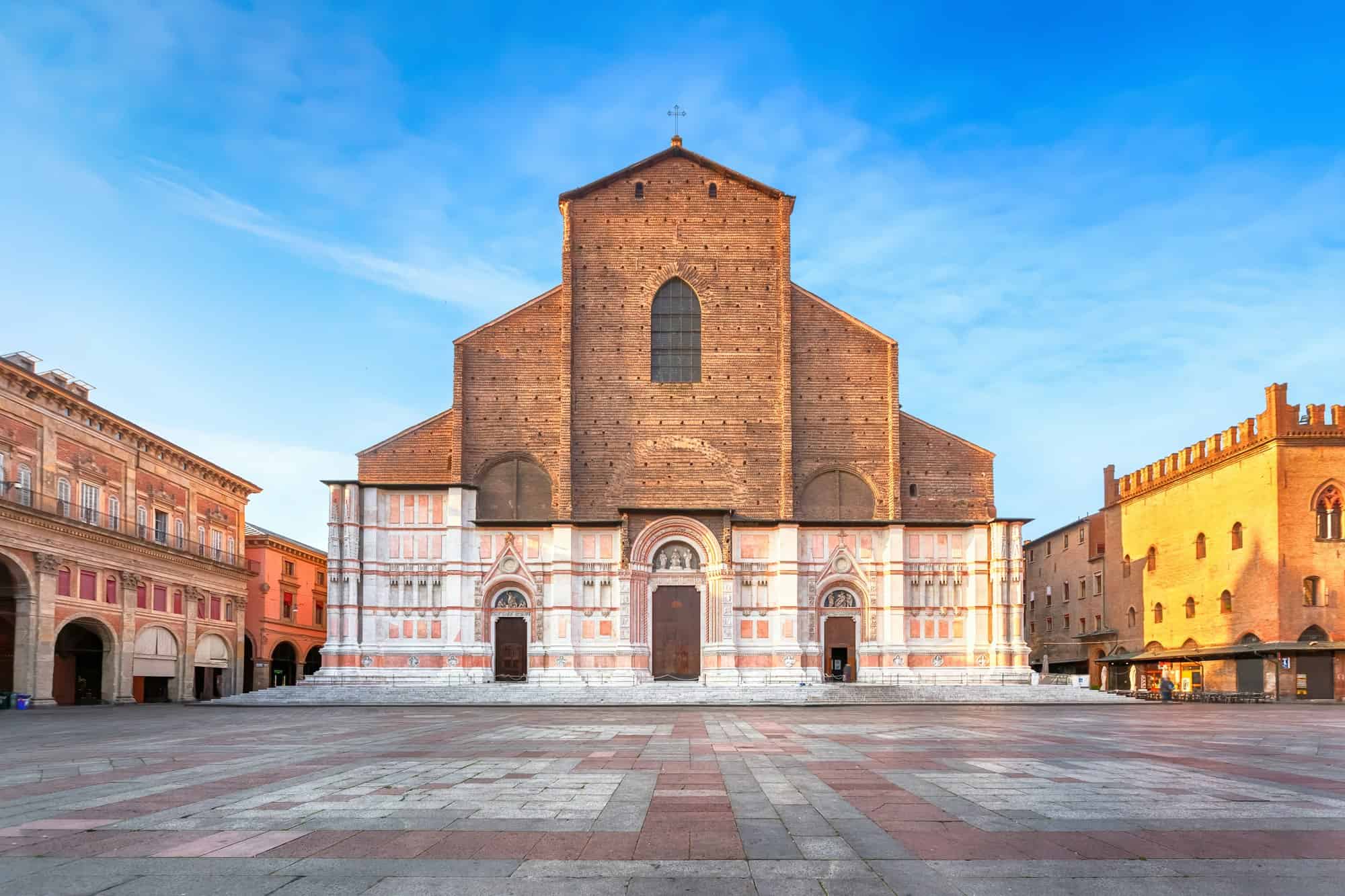
Piazza Maggiore is the heart of Bologna. Surrounded by historic buildings such as the Basilica of San Petronio, the Palazzo del Podestà, and the Palazzo d’Accursio, this square is the ideal place to soak up the atmosphere of Bologna. The Fountain of Neptune, with its imposing statue, is an icon of the city and a meeting point for locals and tourists.
**Practical tip**: Visit the square at sunset to admire the warm colors of the buildings and enjoy an aperitivo in one of the historic cafés.
2. The Two Towers: Garisenda and Asinelli
The Two Towers are the symbol of Bologna. The Asinelli Tower, 97.2 meters tall, is open to the public: climbing its 498 steps offers a breathtaking panoramic view of the city. The leaning Garisenda Tower is closed for safety reasons, but is equally fascinating to admire from the ground.
3. The Porticoes of Bologna: UNESCO World Heritage
The Porticoes of Bologna are an architectural masterpiece, declared a UNESCO World Heritage Site in 2021. Walking under the porticoes means discovering hidden corners, boutiques, cafés, and historic churches. The longest portico, the Portico of San Luca, extends for 3.8 km and leads to the Sanctuary of the Madonna di San Luca, a place of worship and a pilgrimage destination.
**Practical tip**: Use the Portico of San Luca for a unique urban trekking experience with a view of the hill.
4. The University of Bologna and the Archiginnasio
The University of Bologna is a historic institution that has hosted illustrious students such as Dante and Petrarch. The Archiginnasio, the former university building, houses the magnificent Anatomical Hall, with wooden decorations and statues that tell the history of medicine.
Bolognese Cuisine: A Journey Through Flavors
Bologna is synonymous with gastronomic excellence. The city is the home of ragù alla Bolognese, handmade tagliatelle, and tortellini in brodo. Here are some must-try dishes and where to enjoy them:
– Tagliatelle al ragù: Try this iconic dish at a traditional trattoria like Trattoria da Gianni.
– Tortellini in brodo: Perfect for cold days, you can find them at historic restaurants like Osteria dell’Orsa.
– Mortadella: A cured meat symbolizing Bologna, perfect for a sandwich or as an appetizer.
– Crescentine: Savory fritters served with cured meats and cheeses, ideal for an aperitif.
**Traveler tip**: Take a Bolognese cooking class to learn how to make handmade pasta. Many local schools offer hands-on experiences for tourists.